How to play Kanpai Niuniu
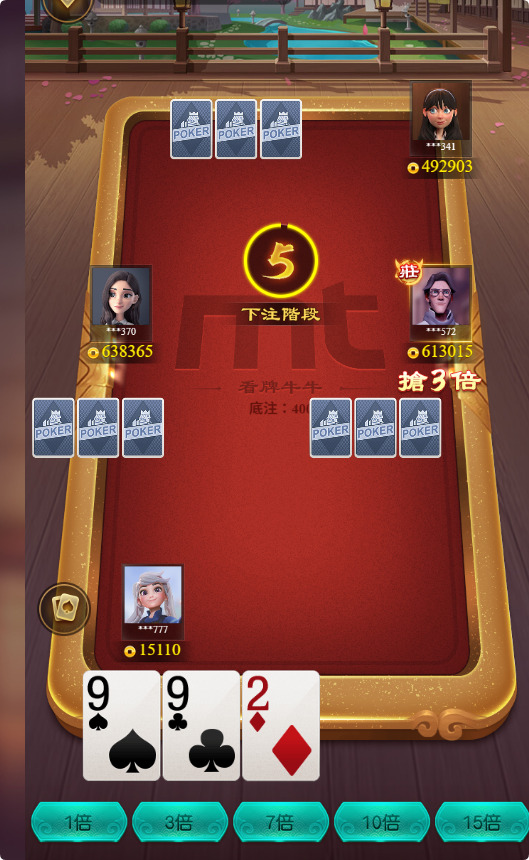
View part of the hand, follow the round’s available actions and read the final five-card classification. Use the screenshots to understand grouping and comparison.

Check this version’s action order
In Kanpai Niuniu, part of the hand is visible before you choose an action. How many cards are visible, when to confirm and whether dealer selection is available depend on the current rules and prompts.
The full five-card hand determines the result
Niuniu grouping looks for three cards totalling a multiple of ten, then uses the units digit of the remaining two. Early cards provide information, but wait for all five and the system’s classification; a partial hand is not a guaranteed result.
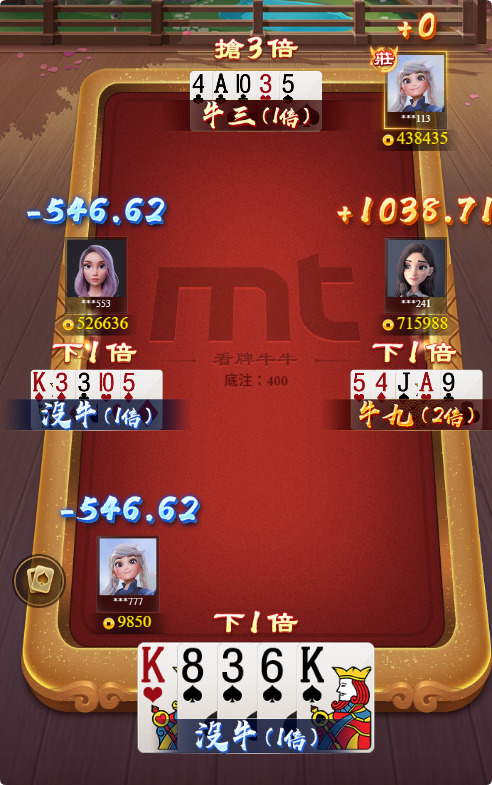
Example: K, 8 and 3
If the rules value K at ten, K plus 8 plus 3 totals 21. Those three cards alone are not a multiple of ten. Other three-card combinations may still be possible within the final five, so check the complete hand.
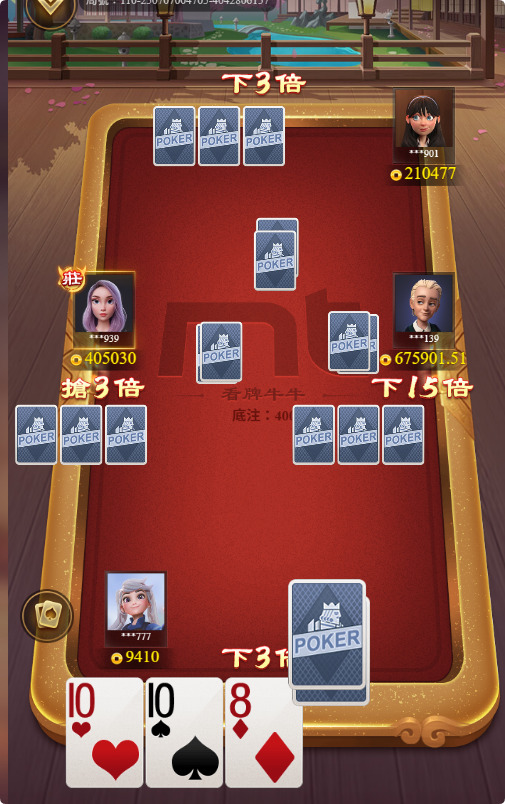
Example: two ten-point cards
Two ten-point cards total twenty. Adding another ten-point card makes thirty, a valid multiple-of-ten group. The remaining two cards and this game’s special-hand rules still matter. The screenshots below show additional examples.
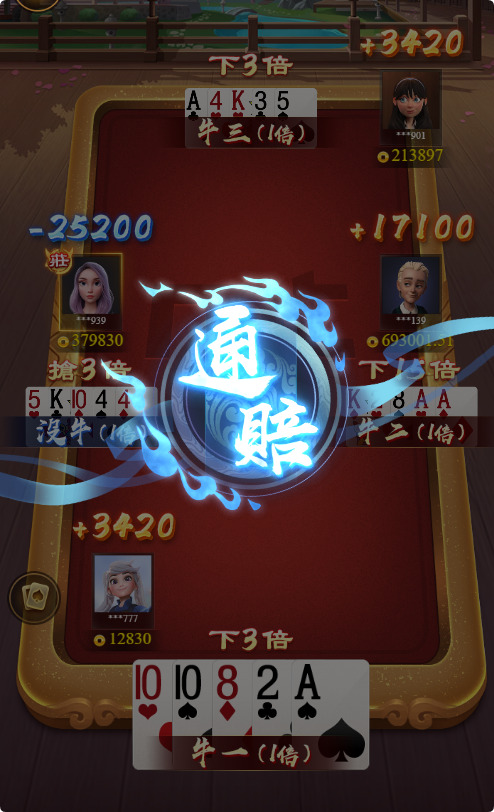
Read the option before continuing
Check each option’s conditions and coin cost before confirming. These examples explain grouping; they are not fixed recommendations to raise a multiplier or seek the dealer role, and do not guarantee results.